
Table of Contents

- Introduction
- Nigerian Consumers Have Changed How They Buy
- Why “DM for Price” Is Quietly Killing Sales
- Why Transparent Businesses Earn More Trust
- Winning Businesses Make Value Easy to See
- Practical Ways Nigerian Businesses Can Become More Transparent
- Transparent Pricing Improves Marketing Performance
- Common Pricing Mistakes Nigerian Businesses Should Avoid
- How DealPantry Helps Businesses Win in an Inflationary Economy
- Frequently Asked Questions
- Conclusion
- Final Call-to-Action
Introduction
Let’s be honest about what’s happening in the market right now.
The Nigeria your business grew up in — where a customer would casually inbox you, chat for a bit, build small rapport, then buy — is fading fast. Today’s customer opens six tabs, checks three Instagram pages, screenshots two price lists from competitors, and then decides whether to even send you a message. Inflation didn’t just raise your cost price. It rewired how every single Nigerian shops.
Every trip to the market now comes with a silent calculation running in the customer’s head. Every “add to cart” is weighed against last week’s transport fare, this month’s data subscription, and the fear that prices will jump again before payday. In that environment, “DM for price” isn’t a sales tactic anymore — it’s a conversion killer. It’s an extra, unnecessary toll gate between a ready buyer and your product, and in 2026, ready buyers don’t wait at toll gates. They scroll past.
Meanwhile, the businesses quietly pulling ahead — the ones whose WhatsApp is buzzing with serious buyers instead of “how much” comments that go nowhere — have figured out something simple: friction is now more expensive than a discount. Every extra step you force a customer to take to find your price is a step where you lose them to a competitor who didn’t make them work for it.
Transparency is no longer just good customer service — it is a competitive advantage.
This guide breaks down exactly why transparent pricing is winning in Nigeria’s inflationary economy, why hiding your prices is quietly bleeding your sales, and what practical, no-nonsense steps you can take starting today — whether you’re running a provisions store in Lagos, a boutique sourced from Aba, a pharmacy counter, or an Instagram shop juggling FX-driven restocks.
Nigerian Consumers Have Changed How They Buy
Inflation Has Turned Every Shopper Into a Price Researcher
There was a time when Nigerian shoppers bought mostly on relationship, trust, or convenience — “I’ve always bought from this seller” or “this shop is close to my house.” That era isn’t dead, but it’s been pushed aside by something more urgent: survival math.
When the naira loses value seemingly every quarter, and the cost of a bag of rice or a carton of noodles can shift within weeks, customers stop trusting their memory of “how much things cost.” They start actively researching before they spend a single kobo. This shows up everywhere:
- Comparison shopping has become second nature. A customer sees your product on Instagram, then quietly checks three other pages before responding — not because they don’t like your brand, but because they can no longer afford to guess.
- Delayed purchasing is now a defense mechanism. Many shoppers wait, watch, and compare over days rather than buying on impulse, because an impulsive buy at the wrong price can wreck a tight budget.
- Value-first decisions have replaced brand loyalty as the default. Customers aren’t necessarily loyal to the cheapest option — they’re loyal to whoever proves they’re not being overcharged.
- Household budgets have tightened, which means every purchase is now measured against rent, transport, and feeding — not just compared to other sellers.
The result? Price discovery now happens before engagement, not during it. By the time a customer messages you, in the old model, they were often just starting the conversation. In today’s model, if they can’t find your price upfront, many of them never start the conversation at all — they simply move to the next page on their timeline, where the price is already visible.
This is the single biggest shift Nigerian MSMEs need to understand: you are no longer the first stop in the buying journey. You are one of several tabs open at the same time, and the seller who removes the guesswork first is usually the seller who gets the sale.
Every Extra Step Costs You Customers
Think about the last time you saw a post that said “DM for price” and actually followed through. Be honest — how often did you scroll past instead?
That’s the exact behavior your customers are showing you every single day, and most businesses don’t realize how much revenue disappears silently because of it. Every one of these common phrases creates a moment of friction:
- “DM for price”
- “Call for price”
- “Inbox us”
- “WhatsApp for details”
On the surface, these look like normal, harmless calls-to-action. In reality, each one adds a step between curiosity and purchase — and in behavioral terms, every extra step is a chance for the customer to lose momentum, get distracted, forget, compare, or simply decide it’s not worth the effort.
Here’s what actually happens in that gap:
- The customer sees your product and feels a flicker of interest.
- They’re asked to leave the comfortable, low-effort scrolling experience and take action — click, type, wait.
- While they wait for your reply (which might take minutes or hours), that flicker of interest cools off, or a competitor’s post — with a visible price — appears in their feed.
- They buy from the seller who didn’t make them work for the answer.
This is why so many Instagram and Facebook sellers experience high engagement (likes, comments, “how much” questions) but disappointing actual sales. The comments section is full of interest. The DMs are full of ghosts. That gap between “how much” and “I’ve paid” is where inflation-era Nigerian shoppers are quietly walking away — not because your product is wrong, but because your pricing process asked for more patience than they currently have to give.
The businesses winning right now are the ones who understood a simple truth: in this economy, convenience sells almost as hard as price does. A customer who sees ₦8,500 boldly written under a product photo is already halfway to paying. A customer who has to ask, wait, and negotiate is still deciding whether the entire purchase is worth the hassle.
DealPantry Insight: Businesses that list products with visible prices on DealPantry are discovered by buyers who are already comparing offers — meaning fewer time-wasting chats and more purchase-ready customers reaching out with real intent to buy, not just window-shop.
Why “DM for Price” Is Quietly Killing Sales
Customers Assume Hidden Prices Mean Higher Prices
Here’s an uncomfortable truth every Nigerian merchant needs to hear: when you hide your price, your customer doesn’t assume you’re being polite or professional. They assume you’re hiding something — usually that the price is high, negotiable upward for “customers who look like they can pay,” or inconsistent depending on who’s asking.
This isn’t paranoia on the customer’s part — it’s pattern recognition built from years of market experience. Anyone who has haggled at Balogun Market or negotiated a “final price” at Ariaria knows the unspoken rule: prices flex based on how you’re dressed, how you talk, and how desperate the seller thinks you are. That same instinct now follows Nigerian shoppers online. When they see “DM for price,” a part of them braces for:
- Distrust — “Why can’t they just tell me? What are they hiding?”
- Uncertainty — “Is this within my budget at all, or am I wasting my time asking?”
- Negotiation fatigue — “I don’t have the energy to haggle today. I just want to know the number.”
- Fear of being overcharged — “If I ask first, will they size me up and quote me a ‘customer price’ instead of the real price?”
For a generation of buyers already exhausted by rising transport costs, unstable data prices, and shrinking take-home pay, this mental friction is often enough to make them simply close the chat and move on. You didn’t lose the sale because your product was wrong. You lost it because your pricing process felt like a gamble they didn’t have the patience to take.
Hidden Prices Increase Cart Abandonment
Whether it’s a physical “cart” on a website or the mental cart a customer builds up while scrolling your Instagram page, the principle is identical: the moment you interrupt a buying decision with an unanswered question, you increase the odds that the customer leaves before completing the purchase.
Here’s how it plays out:
- Interruption of buying flow. The customer was in “yes, I want this” mode. Being told to DM, call, or inbox forces them to switch from a buying mindset to an investigating mindset — and many never switch back.
- Reduced confidence. Once a customer has to ask basic questions just to know if a product fits their budget, their confidence in the transaction drops. If getting the price is already a struggle, what happens when there’s a problem with delivery or a return?
- Shoppers move to competitors. In a market flooded with alternatives — and let’s be real, almost every product category in Nigeria has multiple sellers competing for the same customer — the shopper doesn’t need to fight for your price. They simply scroll to the next seller who already answered the question.
Cart abandonment isn’t just an e-commerce term for big websites. It happens in your DMs, your WhatsApp Business chat, and your comment section every single day — usually silently, without a complaint, without a “no thank you.” The customer just disappears.
Price Transparency Saves Time for Buyers and Sellers
Here’s the part most Nigerian business owners miss: transparent pricing isn’t just good for the customer — it protects your own time and sanity too.
For the buyer:
- Faster decisions. They know instantly whether your product fits their budget, so they can act immediately instead of waiting on a reply that might come hours later.
For the seller:
- Fewer repetitive chats. Instead of typing out the same price to the fortieth person who commented “how much” on a single post, that information is already visible.
- Less time answering identical questions. Time you’d spend responding to price inquiries can go into fulfilling orders, restocking, or actually growing the business.
- Better qualified inquiries. When someone messages you after seeing a visible price, you already know they’re not “just checking” — they’ve accepted the price and are asking about something more specific: delivery, payment, or stock availability. These are warm leads, not cold ones.
Think about the mental and financial cost of answering “how much is this” fifty times a day across Instagram comments, WhatsApp, and Facebook Messenger. That’s fifty interruptions to your actual work — restocking, sourcing, managing staff, handling FX-driven cost changes — just to repeat information that could have been visible from the start.
DealPantry Insight: Instead of endlessly answering “How much?”, “Is this still available?”, and “Can you send the price?” — DealPantry helps buyers see pricing, compare options, and reach out to merchants only when they’re genuinely ready to buy. That means your time goes into closing sales, not repeating them.
Why Transparent Businesses Earn More Trust
Transparency Reduces Buying Risk
Every purchase — no matter how small — carries a bit of risk in the buyer’s mind. “Am I getting a fair deal? Will this be worth my money? Is this seller reliable?” Inflation has made Nigerians more risk-averse than ever, because a bad purchase now hurts more. ₦5,000 spent on the wrong thing isn’t just annoying — it might mean skipping something else that mattered.
Transparent pricing directly reduces that perceived risk through three psychological levers:
- Certainty. When the price is visible, the customer isn’t gambling on an unknown number. They know exactly what they’re signing up for before they commit any time or emotional energy.
- Fairness. A fixed, visible price signals that everyone pays the same amount — you’re not sizing up the customer and adjusting the number based on how they look or talk. That single signal builds more goodwill than most business owners realize.
- Confidence. A business that isn’t afraid to show its price is, by implication, a business that’s confident in its value. Customers pick up on that confidence, even subconsciously.
Customers Reward Honest Businesses
Trust isn’t just a “nice to have” — it’s directly tied to revenue. When a Nigerian customer feels like a business dealt with them honestly, they don’t just complete that one purchase. They:
- Come back for repeat purchases, because they no longer need to “start from zero” negotiating or verifying trust each time.
- Refer friends and family, because recommending a transparent seller carries no risk to their own reputation — nobody wants to send their cousin to a seller who might overcharge them.
- Leave stronger reviews and testimonials, because the experience felt fair from the very first interaction, not just at the point of delivery.
- Build long-term loyalty, which matters enormously in an economy where customer acquisition costs (ads, promotions, giveaways) keep climbing. It is far cheaper to keep an existing customer than to chase a new one.
In a market where “customer is king” isn’t just a saying but an operating principle, honesty is what turns a one-time buyer into a returning one.
Trust Is the New Competitive Advantage
Here’s the mindset shift Nigerian businesses need to make: transparency is not a discount strategy. It’s a branding strategy.
Businesses often assume that showing prices means competing purely on “who is cheapest” — and that scares many merchants away from being transparent in the first place. But that’s not what’s actually happening in the market. Customers aren’t only hunting for the lowest number; they’re hunting for the seller they can trust not to exploit them. A slightly higher price from a transparent, reliable seller often beats a mysterious “DM for price” from an unknown one — because trust removes the anxiety that comes with every hidden-price transaction.
In an economy defined by uncertainty, the business that removes uncertainty from the buying experience becomes the business customers default to — even when a cheaper option exists elsewhere.
DealPantry Insight: Transparent merchants on DealPantry build stronger credibility because customers can evaluate prices before making contact — meaning trust is already established before the first “hello” is even typed.
Winning Businesses Make Value Easy to See
Clear Pricing Beats Premium Positioning During Inflation
In a stable economy, some businesses can afford to be mysterious about pricing and lean on brand prestige instead. In an inflationary economy, that luxury disappears fast. Customers across every category — supermarkets, pharmacies, electronics, and fashion — are now prioritizing clarity over mystery:
- Supermarkets that clearly shelf-tag every item (even amid frequent price changes) build shopper confidence and reduce till-point disputes.
- Pharmacies that display prices for common drugs and consultations remove the anxiety that stops sick customers from even walking in.
- Electronics dealers who post exact prices for phones, accessories, and gadgets attract buyers who’ve already decided to purchase — instead of endless “cheapest price” haggling that eats up the whole afternoon.
- Fashion retailers who tag outfits with visible prices convert Instagram scrollers into buyers faster, because fashion purchases are often impulse-driven — and impulse doesn’t survive a long DM exchange.
Across every sector, the pattern is the same: clarity now beats mystique. Customers aren’t impressed by “premium and undisclosed” — they’re won over by “clear and confident.”
Smaller Packs and Bundles Sell Better
Inflation hasn’t just changed how people shop — it’s changed how much people can afford to buy at once. Nigerian consumers, especially in the mass market, are increasingly choosing smaller pack sizes and bundles because:
- Affordability matters more than bulk value right now. A customer may know that a bigger pack is cheaper “per unit,” but if the upfront cost is too high, they simply can’t buy it — no matter how good the deal is.
- Visible savings on smaller packs feel more achievable and less risky, especially for first-time buyers testing a new product or brand.
- Easier purchasing decisions happen when the price point matches what’s actually in the customer’s pocket that day, rather than forcing them to save up or skip the purchase entirely.
Businesses that adjust their offering — sachets instead of only cartons, smaller fashion bundles instead of only full sets — are meeting customers where their budgets actually are, not where they used to be.
Display Unit Prices
One of the simplest, highest-impact transparency habits a business can build is showing the price per unit, not just the price per pack. For example:
- ₦500 per sachet
- ₦5,500 per carton
- ₦220 per bottle
Why does this matter so much? Because it lets customers instantly compare value across different pack sizes and different sellers without doing mental math under pressure. A customer comparing your ₦5,500 carton to a competitor’s ₦6,000 carton can immediately tell which is the better deal — without needing a calculator, without needing to ask you, and without the friction of an extra question.
Unit pricing also signals confidence. It tells the customer: “We’re not hiding behind bulk pricing tricks — here’s exactly what you’re paying for the smallest unit, so you can decide what works for your budget.”
Practical Ways Nigerian Businesses Can Become More Transparent
Always Display Current Prices
This sounds obvious, but it’s the single most skipped step. Whether it’s a physical price tag, an Instagram caption, or a product listing, the price needs to be visible at the point where the customer is deciding — not three messages later. If a customer has to ask before they can even consider buying, you’ve already lost momentum.
Clearly State What’s Included
A price without context creates its own kind of confusion. Customers want to know exactly what they’re paying for, including:
- Delivery — is it included, or an extra charge?
- Installation — for electronics and appliances, is setup part of the price?
- Warranty — how long, and what does it cover?
- Taxes — are there any additional charges at checkout?
When these details are unclear, customers feel misled the moment an “extra” cost appears — even if it was always going to apply. Stating it upfront protects both your reputation and your conversion rate.
Update Prices Frequently
This is where many Nigerian merchants get burned — not because they’re dishonest, but because the market moves so fast that yesterday’s price is already outdated by tomorrow morning. The problem is: an outdated price doesn’t read as “the market changed.” It reads as “this business tried to trick me.” A customer who shows up expecting one price and gets quoted a higher one instantly loses trust, even if the increase was completely justified by FX rates or supplier costs.
Businesses that treat price updates as a non-negotiable, routine task — not an afterthought — protect themselves from this exact kind of reputational damage.
Explain Price Changes Honestly
Nigerian customers are far more understanding of price increases than most business owners assume — if the reason is explained. People living through the same economy you are dealing with already understand:
- Exchange rate fluctuations
- Supplier price increases
- Rising transportation costs
A simple, honest note — “Prices have been adjusted due to the current exchange rate” — does more for customer trust than silence ever will. Silence invites suspicion. Explanation invites empathy.
DealPantry Insight: DealPantry enables merchants to keep listings updated so buyers see current pricing instead of outdated offers that lead to disappointment — protecting your credibility even as your costs shift with the market.
Transparent Pricing Improves Marketing Performance
Better SEO
Visible prices don’t just help customers — they help search engines understand and rank your listings too. Product pages and posts with clear pricing information tend to match more specific buyer searches (“affordable phone accessories Lagos,” “cheap wholesale provisions Nigeria”), increasing keyword relevance and making it easier for high-intent buyers to find you organically.
Better Social Media Conversion
Posts that include prices consistently outperform posts that don’t, in ways that matter more than vanity metrics:
- More qualified clicks — people who click through already know what they’re getting into.
- Fewer unnecessary comments — less “how much” clutter, more genuine buying interest.
- Better conversion rates — because the guesswork has already been removed before the customer even reaches out.
Better WhatsApp Leads
Perhaps the most immediate benefit: when people message you already knowing the price, the entire conversation shifts. Instead of spending the first five messages on basic price inquiries, conversations move straight to:
- Payment
- Delivery
- Availability
That’s the difference between a chat that closes a sale in two minutes and one that drags on for an hour without any guarantee of a purchase at the end.
DealPantry Insight: DealPantry acts as a discovery engine where customers compare products before contacting merchants — resulting in higher-quality leads and conversations that start where they should: close to the sale, not at square one.
Common Pricing Mistakes Nigerian Businesses Should Avoid
“DM for Price”
As covered throughout this guide, this simple phrase creates unnecessary friction and quietly costs businesses their most impulsive, ready-to-buy customers.
Outdated Prices
Letting old prices linger on your page or price list — even accidentally — damages trust the moment a customer discovers the real (higher) price. It reads as bait, even when it isn’t.
Hidden Delivery Charges
Surprise charges at the point of payment are one of the fastest ways to lose a customer mid-transaction. If delivery isn’t included, say so upfront — don’t let the customer find out after they’ve already committed emotionally to the purchase.
Negotiating Every Customer
Constant one-on-one negotiation drains your time, creates inconsistency (different customers paying different prices for the same product), and — most damagingly — signals that your “real” price is actually lower than what you first quoted. This erodes trust with repeat customers who compare notes.
Different Prices Across Platforms
Quoting one price on Instagram, another on WhatsApp, and a third in person creates confusion and, worse, suspicion. Customers talk to each other. Inconsistency is one of the fastest ways to damage a brand’s credibility in a tightly connected market.
How DealPantry Helps Businesses Win in an Inflationary Economy
Every merchant’s fear around transparent pricing is valid — and worth naming directly. Many Nigerian vendors avoid displaying prices because they’re worried about competitors undercutting them the moment their prices go public, or because their wholesale costs shift so quickly that a listed price feels outdated within days. These aren’t irrational fears; they’re the lived reality of running a business in an economy where your supplier can change their rate overnight.
This is exactly the gap DealPantry Africa Ltd was built to close.
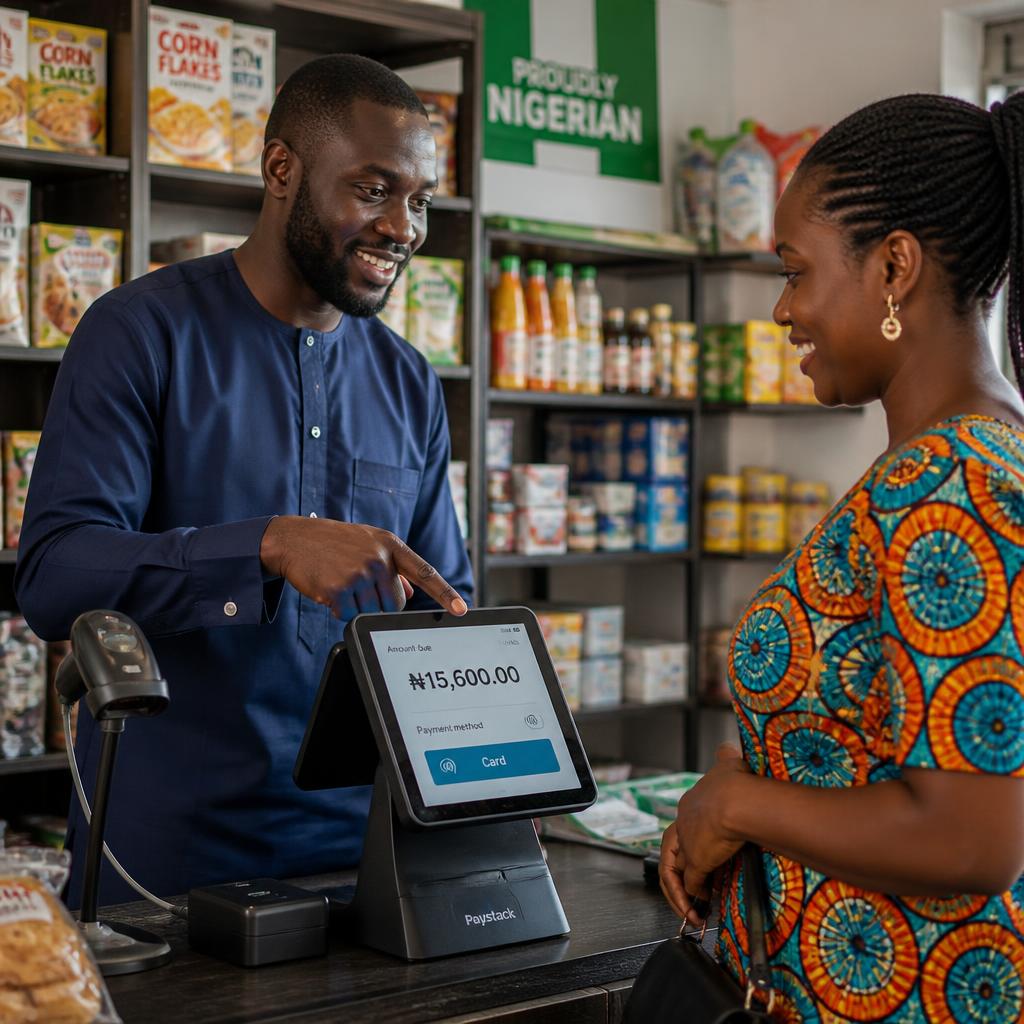
Reach High-Intent Buyers
People searching DealPantry aren’t casually scrolling — they’re actively comparing prices with the intent to buy. Listing your business there puts you in front of customers who have already decided to spend; they’re just deciding who to spend with.
Reduce Time-Wasting Inquiries
Visible pricing naturally filters out casual browsers and price-testers, leaving you with inquiries from customers who are serious about completing a purchase — saving you hours of repetitive back-and-forth every week.
Build Customer Trust Before the First Conversation
Because pricing is visible and comparable from the outset, transparency creates confidence in your business before a customer ever sends their first message — meaning less convincing, less negotiating, and faster closes.
Stay Competitive With Market Visibility
DealPantry’s real-time price editing tools directly address the fear that keeps many merchants from going transparent in the first place. Wholesale costs change — sometimes by the week, sometimes by the day. Instead of being locked into a price that becomes unprofitable, or dodging transparency altogether to avoid that risk, merchants can update their listings instantly to reflect current costs. You stay accurate, you stay protected, and you stay competitive — without the constant fear of a competitor undercutting a price you can no longer honor.
Turn Price Transparency Into a Competitive Advantage
The goal was never to force every business into a race to the bottom on price. Rather than competing purely on who is cheapest, DealPantry positions transparent merchants to compete on what actually builds long-term customer loyalty:
- Honesty
- Convenience
- Trust
- Value
These are the qualities that keep customers coming back, long after the initial sale — and they’re far harder for a competitor to copy than a price tag.
Frequently Asked Questions
Does showing prices reduce negotiation? Yes, in most cases. Visible pricing sets clear expectations upfront, which naturally reduces the back-and-forth haggling that eats up a merchant’s time. Some negotiation may still happen for bulk or wholesale orders, but it becomes a conversation about volume discounts rather than starting from zero every time.
Should service businesses also display prices? Absolutely. Even when exact pricing varies by project (like tailoring, repairs, or consulting), displaying a starting price or price range gives customers a realistic expectation and filters out inquiries that were never going to convert.
What if my supplier changes prices frequently? This is one of the most common merchant concerns — and it’s valid. The solution isn’t to hide your prices; it’s to update them regularly and communicate changes honestly. Tools like DealPantry’s real-time price editing make this manageable, so your listings stay accurate without constant manual stress.
Can transparent pricing increase repeat customers? Yes. Customers who feel they were treated fairly on their first purchase are far more likely to return, because they no longer need to re-verify trust each time they buy from you.
Why do customers dislike “DM for Price”? Because it adds friction, creates suspicion about inconsistent pricing, and interrupts the natural buying flow — all of which increase the chances a customer simply moves on to a competitor instead.
Does price transparency improve SEO? Yes. Listings and posts with clear, specific pricing information tend to match more targeted buyer searches, improving discoverability and attracting more qualified organic traffic.
Should I display discounts separately? Yes. Clearly showing the original price alongside the discounted price (rather than just the final number) helps customers see the value they’re getting, which reinforces trust and can improve conversion.
Conclusion
Inflation has changed customer behavior permanently. Nigerian shoppers now research before they engage, compare before they commit, and abandon conversations that ask for more patience than they have to give. Businesses can no longer rely on hidden pricing and lengthy back-and-forth conversations to close sales.
The businesses that thrive in this new environment are the ones that make buying easier, faster, and more trustworthy — not necessarily the ones with the lowest prices. Transparent pricing is not about being the cheapest. It’s about reducing uncertainty, building confidence, and earning the kind of loyalty that keeps customers coming back long after the naira takes its next dip.
Ready to attract serious buyers instead of endless price inquiries? List your business on DealPantry Africa Ltd and showcase clear, transparent pricing to customers who are already comparing options and ready to buy. By reducing buying friction and building trust before the first conversation, DealPantry helps your business generate higher-quality leads, save time, and compete more effectively in today’s inflation-driven market.